
Own Your Archive, Choose Where It Runs
For a CTO or CIO responsible for a broadcast archive, the decision that matters most isn't cloud versus on-premise — it's whether the archive is licensed as a capital expense or an operational one. A SaaS-style license is OpEx by design: recurring, per-seat, and tied indefinitely to a vendor's continued willingness to host your content on its terms. A CapEx model — the institution purchasing and owning the archive system outright — decouples that dependency from the hosting question entirely. Once you own it, you can run it on-premise, in the cloud, or as a hybrid, and the choice is yours to revisit at any time.
That distinction is easy to lose during a pilot. SaaS onboarding is fast and avoids procurement friction, which is exactly why it looks pragmatic under time pressure. But the consequence that surfaces later isn't “we ended up in the cloud” — it's “we don't own the system that controls access to our own content,” and that becomes expensive precisely at the point where the archive has to serve production access to hundreds of users across a public broadcaster.
At that point, two costs become visible that were invisible during the pilot: recurring licensing fees tied to seat count, and — where the archive itself is also hosted by that vendor — data egress/ingress charges tied to every read and write against the provider's storage. Neither scales linearly with the value the archive delivers; both scale with usage, which is exactly the direction usage is supposed to grow.
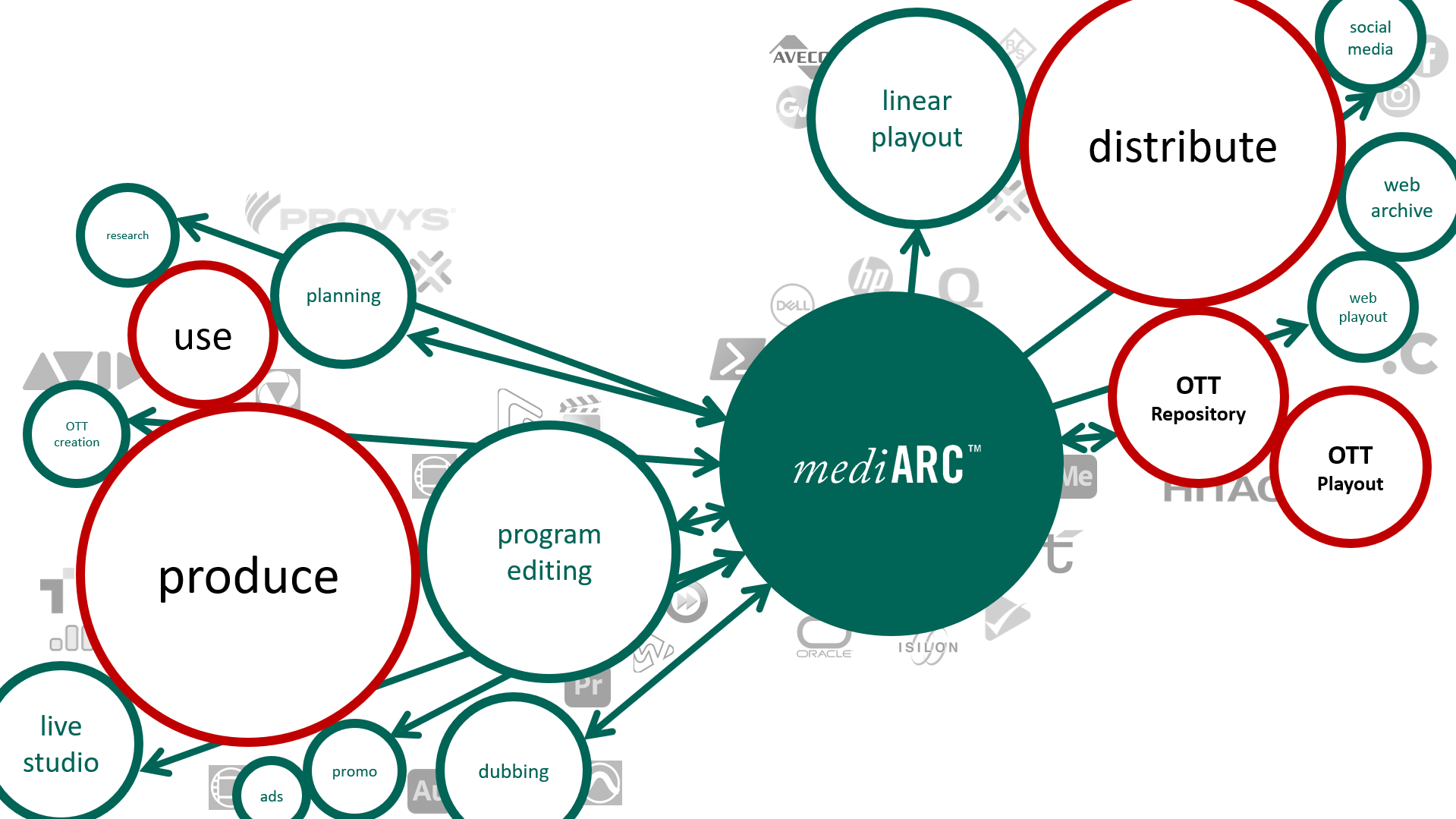
Architectural implication: this is not an argument against the cloud. It's an argument for owning the license and the content, and choosing the hosting topology independently of that decision. A hybrid model handles this well in practice: production and scale-out access can run in the cloud, while a locally hosted Archive Asset management— sized for the institution's core team rather than for every production seat — guarantees the client always retains an independently accessible, fully controlled copy of the archive, regardless of what happens to the cloud contract.
Vendor Independence Is an OAIS Requirement, Not a Preference
OAIS is explicit on this point: an archive must remain accessible without dependency on the system that wrote it. In practice, that means three things should already be in place, independent of any vendor relationship:
- Storage based on documented, non-proprietary formats — LTFS on LTO is the standard reference point for tape-based archives.
- Low-level, documented access to the archive database's content — not only through the vendor's own application layer.
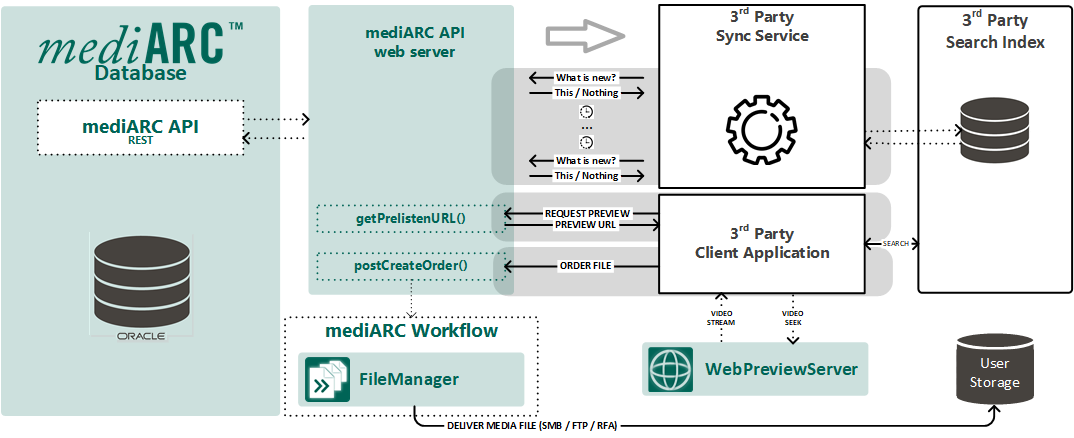
- A documented API that allows the database content to be replicated to a different database, by a different integrator, without cooperation from the original supplier.
If any of these three is missing, the archive is not OAIS-compliant regardless of what the vendor's compliance documentation claims — it is dependent on that vendor's continued existence, support, and pricing.
LOCKSS and Fixity: The Two Concepts That Make Migration Boring
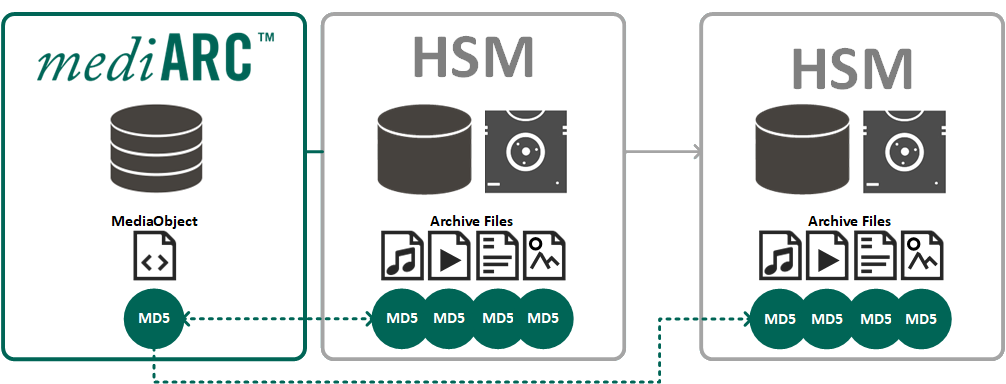
LOCKSS — Lots of Copies Keep Stuff Safe — reduces to a concrete architecture requirement: a minimum of three copies, on two different storage technologies, in at least two physical locations. HSM systems that implement this exist at reasonable cost, provided the selection criteria include a track record of at least 100 comparable installations and demonstrated SLA performance in the field, not just on paper.
What makes this operationally viable over decades is fixity, not tooling sophistication. Every media object carries a checksum in the archive database, computed at ingest and re-verified at every migration. Several NOA mediARC clients have migrated content over 25 years — from early media-attached storage systems (the EMC Avalon generation) to lightweight NAS replicated via ZFS across three or four sites — without incident, and largely without assistance from NOA. Fixity is the reason that worked: every migration step could be verified against the original checksum before the source system was retired.
Storage Economics Change the Codec Conversation
In 2000, a 15 TB SONY AIT-2/AIT-3 tape library occupied roughly one square meter of 19" rack space and cost approximately €1 million. In 2026, a 14 TB disk — even after the AI-driven price increases of the past few years — costs around €500. Extrapolating that curve, a 15 PB archive that requires meaningful rack space today is a plausible candidate for under four rack units within a decade; some point to DNA storage eventually compressing that further, to credit-card scale.
This matters directly for format decisions. The recurring argument that lossless or high-bitrate formats — 24-bit/96kHz audio, 10-bit FFV1 for SD video — are “too expensive to store at scale” is an argument anchored to today's storage cost curve, not tomorrow's. Under Moore's Law applied to storage, that argument has a shrinking half-life. The same objection was raised in 2000 against 24-bit/96kHz audio; it did not hold up over the following decade, and there's no technical reason to expect a different outcome for lossless video mezzanine formats now.
Availability Is a Replication Design Problem, Not a Data-Center Problem
If the primary data center becomes unreachable, the practical question is how much data offset — and downtime — the organization can tolerate before failing over. For two regionally distributed sites, log shipping and standard database replication mechanisms can hold that offset to roughly 10 minutes, without exotic engineering.
Fire is rarely the operative risk in this planning. In some regions, the more relevant threat model is conventional and physical rather than environmental — a distinction that changes redundancy planning more than most disaster-recovery templates account for. Broadcasters operating under those conditions need instantly accessible, truly replicated infrastructure, not backup that requires a manual restore.
This is the specific problem the NOA mediARC replication architecture is built to solve, and it has been proven in production at Sharjah Broadcasting Authority and Kuwait National Radio — Ministry of Information — both operating fully replicated, instantly accessible archive infrastructure across sites.
The Underlying Point for Technical Leadership
None of this is an argument against the cloud in general — it's an argument for keeping the architectural decisions that determine long-term cost, standards compliance, and failover behavior in your own hands, regardless of which storage medium or vendor sits underneath. LOCKSS, fixity, and OAIS-compliant independence aren't archival theory; they are the concrete design constraints that determine whether a 15 PB archive is still affordably migratable and instantly available in ten years, or a stranded asset tied to one supplier's roadmap.
If your current architecture doesn't give clear answers on database-level access, replication independence, and fixity verification, that's worth a technical audit before the next storage refresh cycle — not after.