
A measurement-assisted approach can transform this task into an objective and repeatable process. Instead of relying purely on listening, signal analysis determines the phase relationship between the stereo channels and calculates the optimal azimuth alignment. The result is a clear, quantifiable value that allows operators to adjust the tape head with greater confidence and consistency.
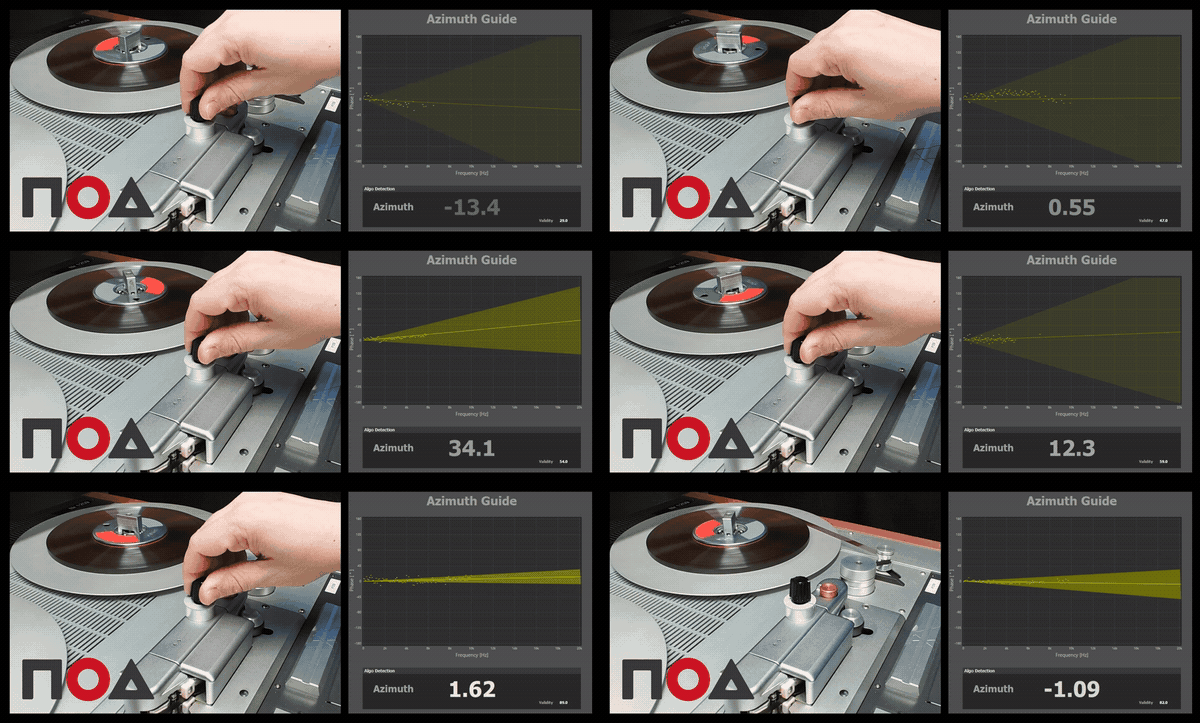
This methodology is implemented in AzimuthGuide, a feature integrated into NOARecord. AzimuthGuide analyzes the stereo signal during transfer and provides real-time visual guidance together with a quantified phase deviation value normalized to 10 kHz. A validity indicator helps assess whether the measurement is reliable.
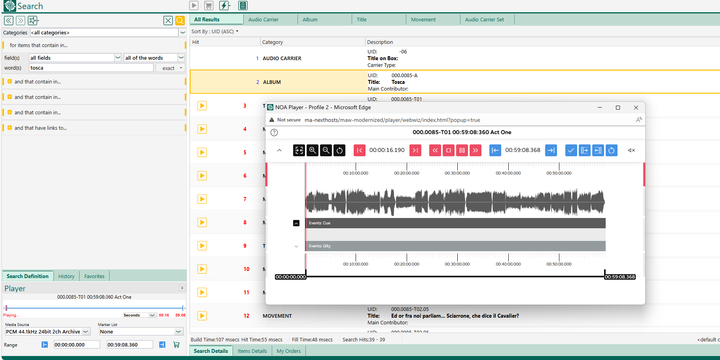
The same analysis can also be applied retrospectively. Within WaveScanner, NOA’s server-side audio processing engine, the AzimuthGuide methodology can analyze previously digitized stereo tape files to verify whether azimuth alignment was correctly set at the time of transfer.
By replacing subjective listening with signal-based analysis, azimuth alignment becomes measurable, documentable, and repeatable, supporting consistent quality in both new digitization workflows and the evaluation of past transfers.